
Introduction
Keyword research is the foundation of every successful SEO strategy. Whether you are a blogger, business owner, affiliate marketer, content creator, or digital marketing professional, understanding how people search online can significantly impact your website’s visibility, traffic, and conversions.
Many website owners spend countless hours creating content without first identifying what their target audience is actually searching for. As a result, they publish articles that receive little to no organic traffic. Keyword research eliminates this guesswork by helping you discover the exact words and phrases users enter into search engines.
In today’s competitive digital landscape, keyword research is no longer about finding a few popular search terms and stuffing them into your content. Modern keyword research focuses on understanding user intent, identifying content opportunities, analyzing competitors, and creating valuable content that satisfies searchers’ needs.
This comprehensive guide explores everything you need to know about keyword research, including its importance, types of keywords, research methods, tools, advanced strategies, common mistakes, and future trends.
What Is Keyword Research?
Keyword research is the process of discovering and analyzing the search terms people use in search engines such as Google, Bing, and YouTube.
The primary goal is to identify keywords that:
- Have sufficient search volume
- Match your audience’s interests
- Align with your business goals
- Have achievable competition levels
- Generate qualified traffic
For example, if you run a fitness blog, users may search for:
- Best home workouts
- Weight loss exercises
- Beginner fitness routine
- How to lose belly fat
Each of these search phrases represents a keyword opportunity.
By understanding these search patterns, you can create content that directly answers user questions and increases your chances of ranking higher in search results
 SEO
SEO
KR Krishna Kushwaha| Jun 02, 2026| 8 min read
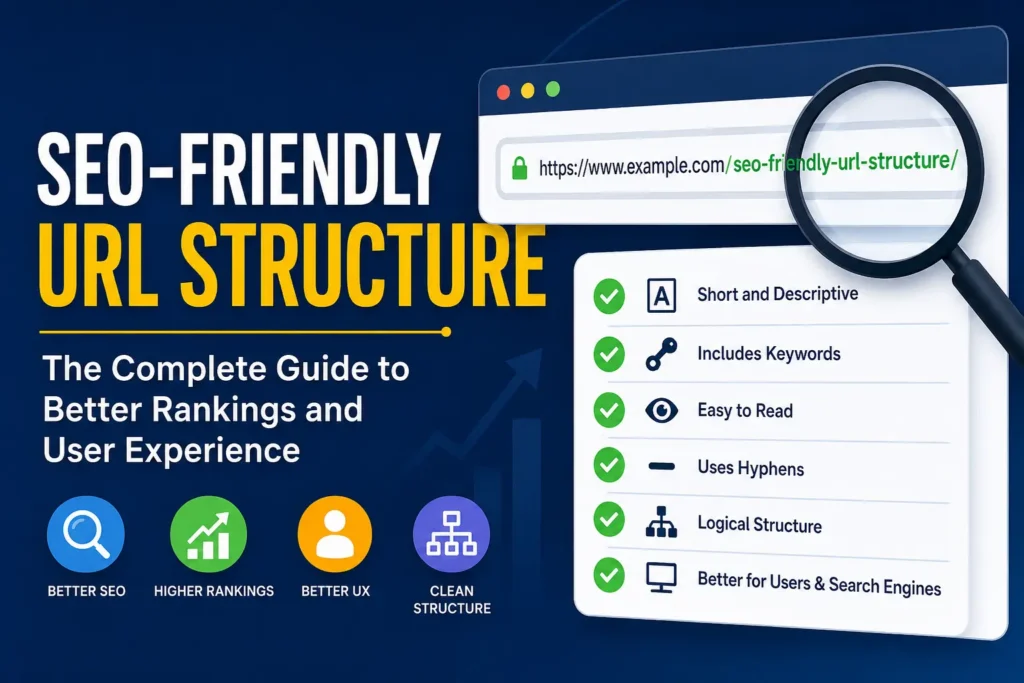
SEO-Friendly URL Structure
Why Keyword Research Matters
Keyword research is one of the most important components of search engine optimization.
1. Understand Your Audience
Keyword research reveals what your audience wants, needs, and struggles with.
Instead of guessing what content to create, you can use actual search data to guide your strategy.
For example, if thousands of people search for “best budget smartphones,” you know there is demand for content on that topic.
2. Increase Organic Traffic
Targeting relevant keywords helps your website appear in search engine results when users search for those terms.
Higher rankings often lead to more organic traffic.
3. Improve Content Strategy
Keyword research helps content creators identify:
- Blog topics
- Video ideas
- Product pages
- FAQs
- Landing pages
This ensures every piece of content serves a purpose.
4. Boost Conversions
The right keywords attract users who are ready to take action.
For example:
- Informational keyword: “What is SEO?”
- Commercial keyword: “Best SEO tools”
- Transactional keyword: “Buy SEO software”
Targeting high-intent keywords can significantly increase sales and leads.
5. Gain Competitive Advantage
Keyword research allows you to discover opportunities your competitors may have overlooked.
Finding underserved topics can help you rank faster and capture valuable traffic.
 SEO
SEO
KR Krishna Kushwaha| Jun 02, 2026| 8 min read
How to Optimize Title Tags
Types of Keywords
Understanding different keyword categories is essential for building an effective SEO strategy.
Short-Tail Keywords
Short-tail keywords are broad search terms containing one or two words.
Examples:
- SEO
- Fitness
- Marketing
- Insurance
Characteristics:
- High search volume
- High competition
- Broad intent
While these keywords attract large audiences, ranking for them can be difficult
 SEO
SEO
KR Krishna Kushwaha| Jun 02, 2026| 8 min read
Complete On-Page SEO Checklist
Long-Tail Keywords
Long-tail keywords contain three or more words.
Examples:
- Best SEO tools for beginners
- Home workout plan for women
- Affordable digital marketing courses
Characteristics:
- Lower competition
- Higher conversion rates
- More specific search intent
Long-tail keywords are often easier to rank for and deliver highly targeted traffic
 SEO
SEO
KR Krishna Kushwaha| Jun 02, 2026| 8 min read
On-Page SEO Topics
Informational Keywords
Users searching for information use informational keywords.
Examples:
- What is keyword research
- How does SEO work
- Benefits of content marketing
These keywords are excellent for blog content and educational resources.
Navigational Keywords
Users already know where they want to go.
Examples:
- Facebook login
- YouTube Studio
- Amazon Prime
The user intends to visit a specific website or platform.
Commercial Investigation Keywords
Users are researching before making a purchase.
Examples:
- Best laptops for students
- Ahrefs vs SEMrush
- Top email marketing software
These keywords often lead to conversions.
Transactional Keywords
Users are ready to buy or take action.
Examples:
- Buy iPhone online
- SEO services near me
- Purchase gaming laptop
These keywords have strong commercial intent.
Understanding Search Intent
Search intent refers to the reason behind a search query.
Google prioritizes content that matches user intent.
There are four primary search intents:
Informational Intent
The user wants information.
Examples:
- How to start a blog
- What is SEO
Content types:
- Blog posts
- Tutorials
- Guides
Navigational Intent
The user wants a specific website.
Examples:
- Gmail login
- LinkedIn homepage
Content is generally unnecessary because users already know their destination.
Commercial Intent
The user is comparing options.
Examples:
- Best web hosting providers
- SEMrush review
Content types:
- Reviews
- Comparisons
- Product roundups
Transactional Intent
The user wants to make a purchase.
Examples:
- Buy running shoes online
- Order pizza delivery
Content types:
- Product pages
- Landing pages
- Service pages
The Keyword Research Process
A structured approach improves keyword discovery and selection.
Step 1: Define Your Niche
Start by identifying your niche.
Examples:
- Health and fitness
- Technology
- Personal finance
- Travel
- Education
Your niche determines the topics and keywords you target.
Step 2: Brainstorm Seed Keywords
Seed keywords are broad topics related to your business.
Examples for a digital marketing website:
- SEO
- PPC
- Social media marketing
- Content marketing
These keywords serve as the starting point for deeper research.
Step 3: Use Keyword Research Tools
Keyword tools help generate keyword ideas and data.
Popular tools include:
Google Keyword Planner
Free tool from Google.
Features:
- Search volume estimates
- Keyword suggestions
- Competition metrics
Ahrefs
Provides:
- Keyword difficulty
- Search volume
- Traffic potential
- Competitor analysis
SEMrush
Offers:
- Keyword gap analysis
- Competitive research
- SERP analysis
Ubersuggest
Suitable for beginners.
Provides:
- Keyword ideas
- SEO difficulty
- Content suggestions
Moz Keyword Explorer
Offers:
- Search volume
- Priority scores
- Ranking opportunities
Step 4: Analyze Search Volume
Search volume indicates how many times a keyword is searched monthly.
Example:
- SEO: 100,000+ searches
- Local SEO services: 5,000 searches
Higher volume does not always mean better.
Balance search volume with competition and relevance.
Step 5: Evaluate Keyword Difficulty
Keyword difficulty estimates how hard it is to rank.
Factors include:
- Domain authority
- Backlinks
- Competition
New websites should target lower-difficulty keywords first.
Step 6: Analyze Competitors
Study top-ranking pages.
Examine:
- Content quality
- Backlink profiles
- Content length
- User experience
Competitor analysis reveals ranking opportunities.
Step 7: Group Keywords Into Topics
Instead of targeting individual keywords, organize related terms into topic clusters.
Example:
Main topic:
- Keyword Research
Supporting topics:
- Keyword research tools
- Long-tail keywords
- Search intent
- Keyword difficulty
This structure improves SEO performance.
Best Keyword Research Tools
Google Autocomplete
Google suggests searches as users type.
These suggestions come from real searches and provide valuable keyword ideas.
Example:
Typing “keyword research” may reveal:
- keyword research tools
- keyword research process
- keyword research for SEO
Google Search Console
Shows keywords already driving traffic to your website.
Benefits:
- Discover hidden opportunities
- Improve existing rankings
- Find pages needing optimization
AnswerThePublic
Generates question-based keywords.
Examples:
- What is keyword research?
- Why is keyword research important?
- How to do keyword research?
These are excellent content ideas.
Ahrefs
One of the most powerful SEO platforms.
Features:
- Keyword Explorer
- Competitor research
- Backlink analysis
- Content gap analysis
SEMrush
Ideal for:
- Keyword tracking
- Competitor monitoring
- PPC research
- Content planning
Long-Tail Keywords: The Secret to Faster Rankings
Many SEO experts focus heavily on long-tail keywords.
Why?
Because they:
- Have lower competition
- Match specific intent
- Convert better
Example:
Broad keyword:
“Running shoes”
Long-tail keyword:
“Best running shoes for flat feet beginners”
The long-tail version targets a specific audience and is easier to rank for.
Competitor Keyword Research
Competitor research helps uncover proven opportunities.
Identify Competitors
Search your target keywords and analyze ranking websites.
Look for:
- Similar businesses
- Industry blogs
- Affiliate sites
Analyze Their Keywords
Use SEO tools to identify:
- Top-performing pages
- Organic keywords
- Ranking positions
This helps reveal content gaps.
Find Keyword Gaps
Keyword gaps are keywords your competitors rank for but you do not.
Creating content around these opportunities can increase traffic.
Keyword Clustering
Keyword clustering groups related keywords together.
Example cluster:
Main topic:
Email Marketing
Related keywords:
- Email marketing strategy
- Email marketing tips
- Email marketing software
- Email marketing examples
Rather than creating separate articles for each variation, build one comprehensive resource.
Benefits:
- Better topical authority
- Improved rankings
- Reduced keyword cannibalization
Local Keyword Research
Local SEO focuses on geographic searches.
Examples:
- Dentist in New York
- Best restaurants in Chicago
- Digital marketing agency in London
Local keyword research is essential for service-based businesses.
Strategies include:
- City-based keywords
- Neighborhood keywords
- “Near me” keywords
Voice Search and Keyword Research
Voice search continues to grow through:
- Smartphones
- Smart speakers
- Virtual assistants
Voice searches are typically conversational.
Traditional search:
“SEO tools”
Voice search:
“What are the best SEO tools for small businesses?”
Content should answer natural language questions.
Common Keyword Research Mistakes
Targeting Only High-Volume Keywords
Many beginners chase massive search volumes.
However:
- Competition is intense
- Ranking is difficult
Long-tail keywords often produce better results.
Ignoring Search Intent
Even if you rank, mismatched intent can hurt performance.
Always align content with user expectations.
Keyword Stuffing
Overusing keywords harms readability and SEO.
Focus on natural language and user experience.
Neglecting Competitor Analysis
Competitor insights reveal valuable opportunities.
Ignoring them can slow growth.
Failing to Update Research
Search trends change constantly.
Regular keyword reviews ensure continued relevance.
Advanced Keyword Research Strategies
Topical Authority
Instead of targeting isolated keywords, dominate an entire topic.
Example:
Create multiple articles covering:
- SEO basics
- On-page SEO
- Technical SEO
- Link building
- Keyword research
Google increasingly rewards topic expertise.
Content Gap Analysis
Identify questions your competitors haven’t answered.
These gaps often represent low-competition opportunities.
Trend Analysis
Use trend-monitoring tools to identify emerging topics before they become competitive.
Early content creation can secure rankings faster.
Seasonal Keywords
Some searches spike during specific periods.
Examples:
- Black Friday deals
- Christmas gifts
- Summer travel destinations
Plan content in advance.
Measuring Keyword Performance
Keyword research doesn’t end after publishing content.
Monitor performance using:
- Google Search Console
- Google Analytics
- Ahrefs
- SEMrush
Key metrics include:
- Rankings
- Click-through rate
- Impressions
- Organic traffic
- Conversions
Regular analysis helps improve results.
Future of Keyword Research
Search engines continue evolving.
Important trends include:
Artificial Intelligence
AI-powered search systems increasingly understand context and intent.
Content quality matters more than exact-match keywords.
Semantic SEO
Search engines evaluate topic relevance rather than individual keywords.
Covering related concepts improves visibility.
User Experience Signals
Google considers:
- Page speed
- Mobile usability
- Engagement metrics
Keyword optimization alone is no longer enough.
Conversational Search
Users increasingly search using natural language.
Content should answer complete questions and provide comprehensive solutions.
Conclusion
Keyword research remains one of the most powerful SEO practices available. It provides valuable insights into audience behavior, search intent, market demand, and competitive opportunities. Businesses and content creators that invest time in strategic keyword research are better positioned to attract organic traffic, generate leads, and achieve long-term growth.
Successful keyword research involves more than identifying popular search terms. It requires understanding user intent, analyzing competitors, evaluating keyword difficulty, organizing content into topic clusters, and continuously monitoring performance. Long-tail keywords, semantic SEO, and topical authority have become increasingly important as search engines evolve.
Whether you are launching a new website or scaling an established online business, mastering keyword research will help you create content that aligns with what users are actively searching for. By implementing the strategies outlined in this guide, you can build a stronger SEO foundation, improve search visibility, and create content that delivers measurable results for years to come
FAQs
Keyword research is the process of identifying and analyzing the words and phrases that people use in search engines like Google, Bing, and Yahoo. It helps website owners, bloggers, and businesses understand what their target audience is searching for online. By targeting relevant keywords in content, businesses can improve their search engine rankings, attract organic traffic, and increase conversions. Effective keyword research forms the foundation of a successful SEO strategy because it ensures that content aligns with user interests and search intent.
Keyword research is important because it helps businesses create content that people are actively searching for. Without keyword research, content creators may produce articles, videos, or landing pages that fail to attract visitors. Proper keyword research improves search visibility, drives targeted traffic, increases engagement, and supports higher conversion rates. It also helps marketers understand customer needs, identify market trends, and stay ahead of competitors.
Long-tail keywords are longer and more specific search phrases that usually contain three or more words. Examples include “best keyword research tools for beginners” or “how to find low competition keywords.” These keywords typically have lower search volume than broad keywords but often generate higher conversion rates because they target users with specific needs. Long-tail keywords are especially useful for new websites that want to rank faster in search results.
You can find the right keywords by starting with broad topics related to your business and then using keyword research tools to discover relevant search terms. Analyze search volume, keyword difficulty, and search intent before selecting target keywords. Studying competitors, exploring Google Autocomplete suggestions, reviewing customer questions, and analyzing industry trends can also help identify valuable keyword opportunities.
Several keyword research tools are widely used by SEO professionals. Popular options include Google Keyword Planner, Ahrefs, SEMrush, Ubersuggest, Moz Keyword Explorer, and AnswerThePublic. Each tool provides unique features such as keyword suggestions, search volume estimates, competitor analysis, ranking difficulty scores, and content ideas. The best tool depends on your budget, experience level, and marketing goals.
Leave a Reply