Table of Contents
- Introduction
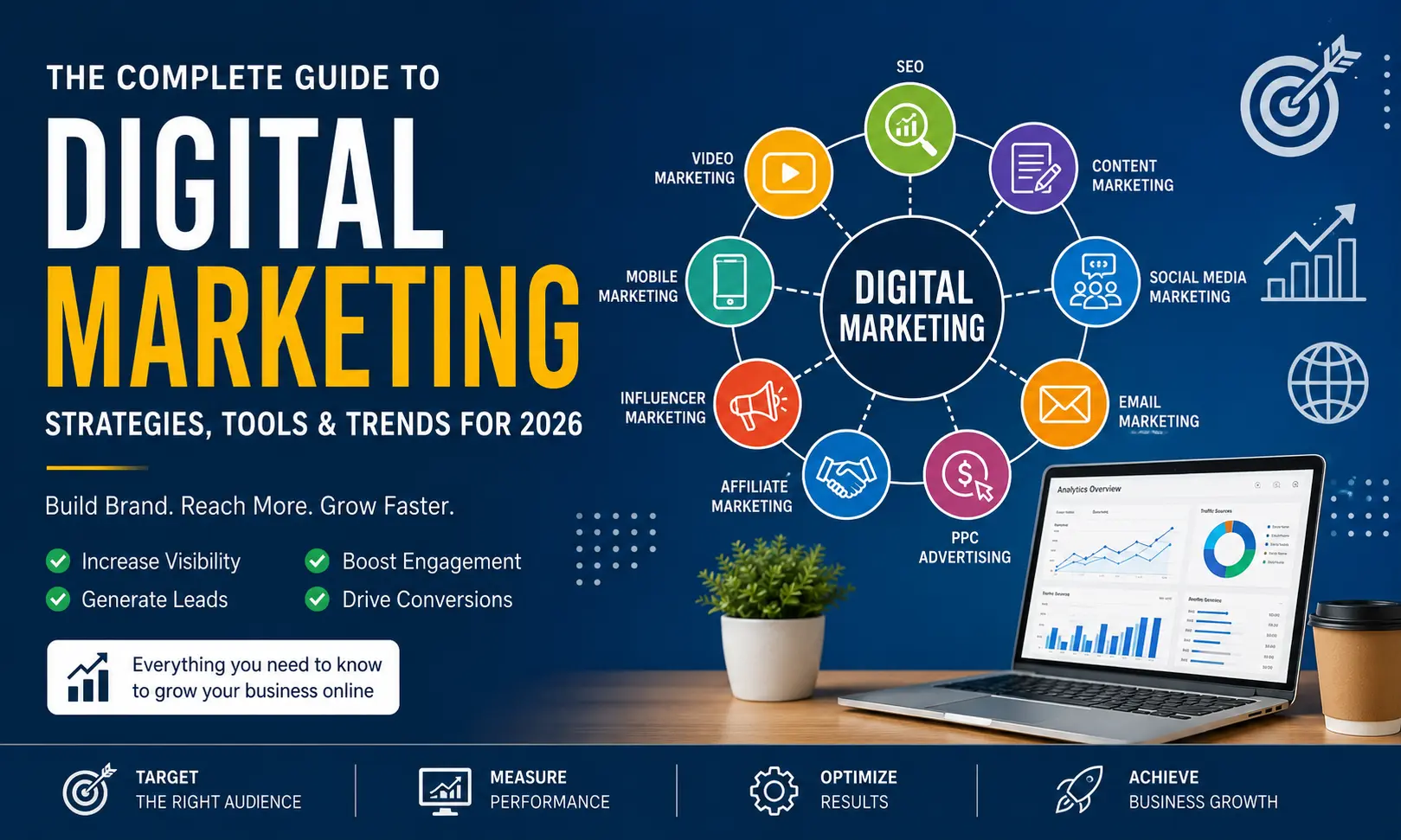
- What is Digital Marketing?
- Why Digital Marketing is Important
- Key Benefits of Digital Marketing
- Types of Digital Marketing
- Search Engine Optimization (SEO)
- Content Marketing
- Social Media Marketing
- Pay-Per-Click (PPC) Advertising
- Email Marketing
- Affiliate Marketing
- Influencer Marketing
- Mobile Marketing
- Video Marketing
- Digital Marketing Trends in 2026
- Conclusion
- Frequently Asked Questions (FAQs)
Introduction
Digital marketing has become the backbone of modern business success. Whether you’re a startup, a small business owner, a freelancer, or a global brand, having a strong online presence is no longer optional—it’s essential. Today, consumers rely on search engines, social media, online reviews, and digital content before making purchasing decisions. Businesses that fail to adapt risk falling behind competitors that actively engage their audiences online.
Unlike traditional marketing, digital marketing enables businesses to connect with highly targeted audiences, measure campaign performance in real time, and optimize strategies based on data. This makes it one of the most cost-effective and scalable methods for building brand awareness, generating leads, and increasing sales.
This comprehensive guide explains what digital marketing is, why it matters, and the key channels every business should understand to thrive in 2026.
What is Digital Marketing?
Digital marketing is the practice of promoting products, services, or brands through digital channels such as search engines, websites, social media platforms, email, mobile applications, and online advertising.
The primary goal of digital marketing is to reach the right audience at the right time with relevant content and compelling offers that encourage action. These actions may include making a purchase, filling out a contact form, subscribing to a newsletter, downloading an ebook, or following a brand on social media.
Unlike traditional marketing methods such as newspapers, television, and radio, digital marketing allows businesses to measure every interaction. Marketers can track website visitors, monitor conversions, evaluate campaign performance, and continuously improve results through analytics.
Digital marketing combines creativity, technology, data analysis, and customer psychology to build meaningful relationships with potential customers.
 SEO
SEO
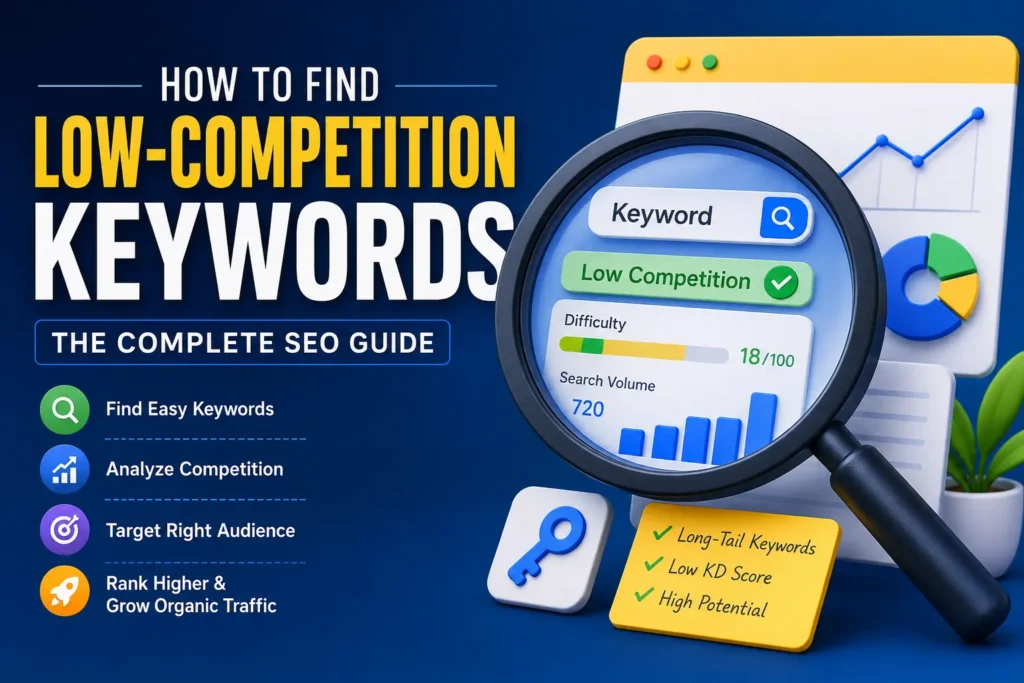
How to Find Low-Competition Keywords: The Complete SEO Guide for Beginners and Experts
Why Digital Marketing is Important
The internet has transformed the way people discover, compare, and purchase products. Most consumers begin their buying journey online, making digital marketing a necessity for businesses of every size.
Some of the biggest reasons digital marketing is important include:
Reach a Global Audience
A local business can attract customers from nearby areas, while larger companies can expand into national and international markets through digital channels.
Cost-Effective Marketing
Digital campaigns generally require lower investment than traditional advertising and provide measurable results, making them suitable for businesses with limited budgets.
Better Customer Targeting
Businesses can target users based on demographics, interests, online behavior, geographic location, devices, and purchasing intent.
Measurable Results
Digital marketing platforms provide detailed analytics that reveal impressions, clicks, conversions, revenue, customer engagement, and return on investment (ROI).
Improved Customer Relationships
Regular communication through email, blogs, and social media helps businesses build trust and long-term loyalty.
Key Benefits of Digital Marketing
1. Increased Brand Awareness
Consistent online visibility helps businesses become more recognizable. Publishing high-quality content and maintaining active social media profiles increases brand exposure.
2. Higher Website Traffic
Effective SEO, content marketing, and paid advertising drive qualified visitors to your website, increasing opportunities for conversions.
3. Better Lead Generation
Landing pages, lead magnets, webinars, and email campaigns capture valuable customer information and nurture prospects into paying customers.
4. Higher Conversion Rates
By delivering personalized messages and optimizing user experiences, businesses can convert more visitors into customers.
5. Improved Return on Investment
Digital marketing campaigns can be continuously optimized based on performance data, helping businesses maximize every marketing dollar.
6. Real-Time Performance Tracking
Analytics tools allow marketers to identify successful campaigns, monitor user behavior, and adjust strategies instantly.
 SEO
SEO
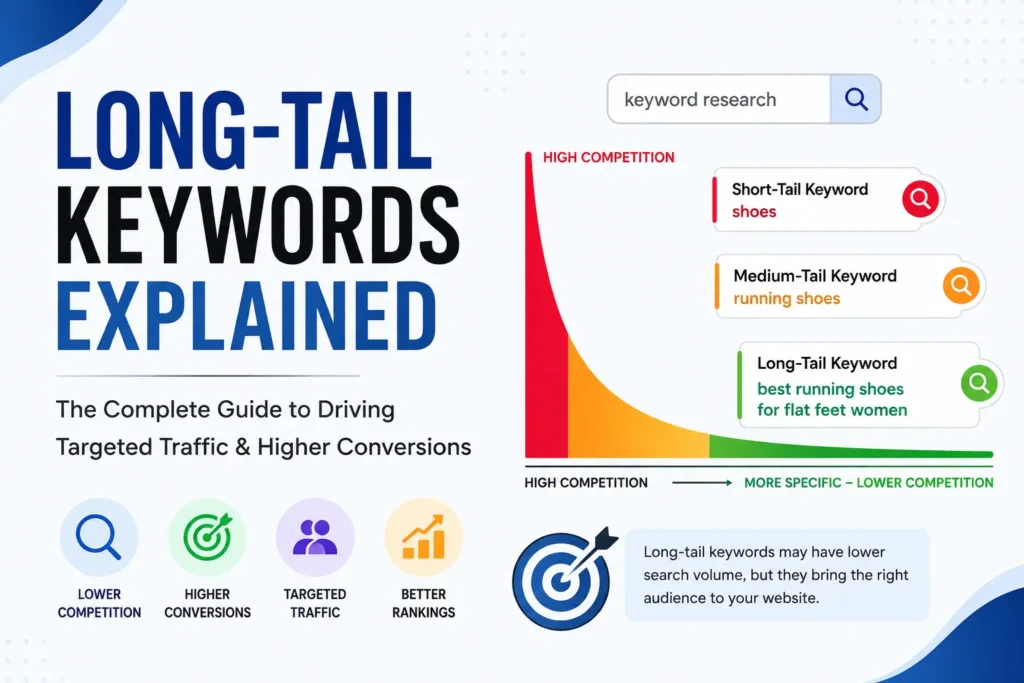
Long-Tail Keywords Explained: The Complete Guide to Driving Targeted Organic Traffic
Types of Digital Marketing
Digital marketing consists of multiple channels that work together to create a comprehensive online strategy.
The major types include:
- Search Engine Optimization (SEO)
- Content Marketing
- Social Media Marketing
- Email Marketing
- Pay-Per-Click (PPC) Advertising
- Affiliate Marketing
- Influencer Marketing
- Mobile Marketing
- Video Marketing
Understanding each channel helps businesses create balanced marketing campaigns that reach customers throughout their buying journey.
Search Engine Optimization (SEO)
Search Engine Optimization (SEO) is the process of improving a website’s visibility in search engine results. When users search for products or services, websites that rank higher receive significantly more traffic.
SEO focuses on increasing organic (non-paid) traffic through high-quality content, technical improvements, and authoritative backlinks.
Main Components of SEO
On-Page SEO
On-page SEO involves optimizing individual pages by improving titles, meta descriptions, headings, keywords, internal links, image optimization, and content quality.
Off-Page SEO
Off-page SEO builds a website’s authority through backlinks, digital PR, brand mentions, and partnerships with reputable websites.
Technical SEO
Technical SEO ensures that search engines can crawl and index a website efficiently. It includes site speed optimization, mobile responsiveness, structured data, XML sitemaps, HTTPS security, and fixing crawl errors.
Local SEO
Local SEO helps businesses appear in location-based searches by optimizing business listings, collecting customer reviews, and maintaining consistent contact information across directories.
Benefits of SEO
- Higher organic traffic
- Increased brand credibility
- Better user experience
- Long-term marketing results
- Higher conversion rates
- Lower customer acquisition costs
Content Marketing
Content marketing focuses on creating valuable, educational, and engaging content that attracts and retains potential customers.
Instead of directly selling products, businesses provide helpful information that solves customer problems and builds trust.
Popular content formats include:
- Blog posts
- Guides
- Tutorials
- Case studies
- Whitepapers
- Infographics
- Podcasts
- Videos
- Ebooks
- Webinars
Benefits of Content Marketing
- Improves SEO rankings
- Generates qualified leads
- Builds authority
- Establishes customer trust
- Encourages social sharing
- Supports every stage of the buyer journey
High-quality content remains one of the most powerful long-term digital marketing assets because it continues attracting visitors long after publication.
 SEO
SEO
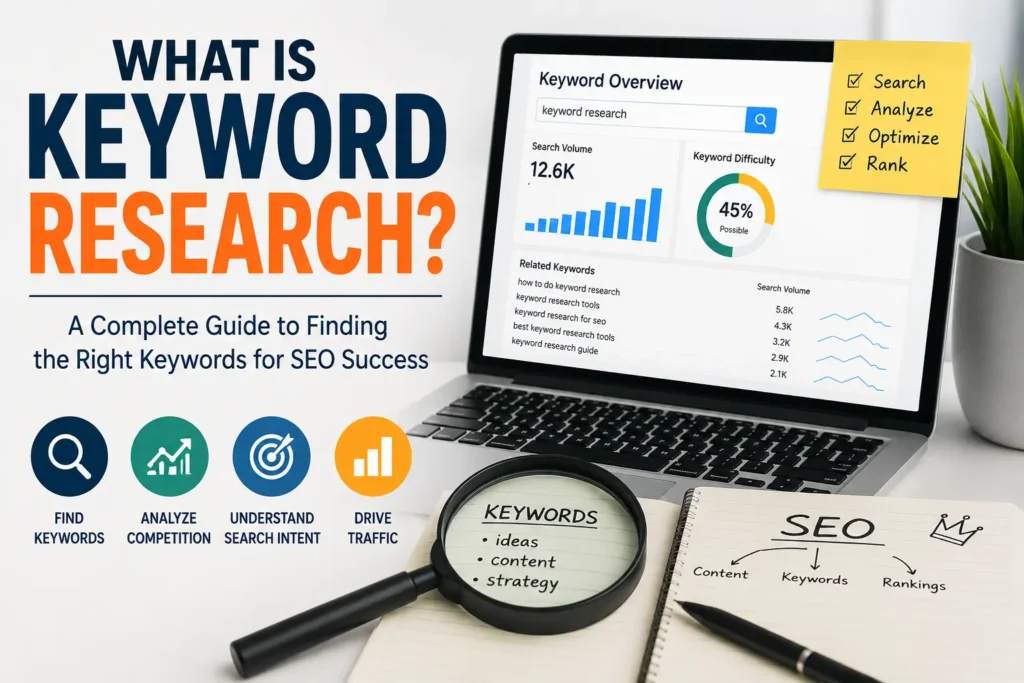
What Is Keyword Research? A Complete Guide to Finding the Right Keywords for SEO Success
Social Media Marketing
Social media marketing involves using platforms such as Facebook, Instagram, LinkedIn, X (formerly Twitter), Pinterest, and TikTok to engage audiences and promote products or services.
A successful social media strategy goes beyond publishing promotional posts. It includes storytelling, community engagement, customer support, influencer collaborations, and performance analysis.
Businesses can use social media to:
- Build brand awareness
- Drive website traffic
- Generate leads
- Increase customer loyalty
- Launch new products
- Collect customer feedback
- Strengthen brand reputation
Consistency, authenticity, and valuable content are the keys to long-term social media success.
Pay-Per-Click (PPC) Advertising
Pay-Per-Click (PPC) advertising is one of the fastest ways to generate targeted traffic and leads. Unlike SEO, which can take time to produce results, PPC allows businesses to appear at the top of search engine results almost immediately.
With PPC, advertisers only pay when someone clicks on their ad. This makes it a measurable and performance-driven marketing strategy.
Benefits of PPC Advertising
- Instant website traffic
- Highly targeted audience
- Flexible budget control
- Easy performance tracking
- High conversion potential
- Fast lead generation
Best Practices
- Conduct thorough keyword research.
- Write compelling ad copy.
- Create optimized landing pages.
- Use negative keywords to reduce wasted spend.
- Monitor campaigns regularly and optimize bids.
Email Marketing
Email marketing remains one of the highest ROI digital marketing channels. It enables businesses to communicate directly with their audience, nurture leads, and encourage repeat purchases.
A successful email campaign delivers valuable content instead of constant promotions.
Types of Email Campaigns
- Welcome emails
- Promotional emails
- Newsletter campaigns
- Product announcements
- Event invitations
- Abandoned cart reminders
- Customer feedback surveys
Benefits
- Personalized communication
- Increased customer loyalty
- Better lead nurturing
- Higher conversion rates
- Affordable marketing costs
- Excellent return on investment
Affiliate Marketing
Affiliate marketing is a performance-based marketing model where affiliates earn a commission for promoting a company’s products or services.
Affiliates typically use blogs, YouTube channels, social media, or email lists to recommend products.
Advantages
- Low marketing risk
- Increased sales
- Wider audience reach
- Pay only for results
- Brand exposure
- Long-term partnerships
Businesses should provide affiliates with quality promotional materials and transparent commission structures.
Influencer Marketing
Influencer marketing involves partnering with content creators who have established credibility and engaged audiences.
Influencers can introduce products to highly targeted communities, increasing trust and purchase intent.
Benefits
- Authentic recommendations
- Improved brand awareness
- Better audience engagement
- Increased sales
- Social proof
- Access to niche communities
Choose influencers based on audience relevance rather than follower count alone.
Mobile Marketing
Most internet users now browse on smartphones, making mobile marketing essential.
Mobile marketing includes:
- Mobile-friendly websites
- SMS campaigns
- Mobile apps
- Push notifications
- Location-based promotions
- Mobile advertisements
Best Practices
- Responsive website design
- Fast page loading speed
- Easy navigation
- Click-to-call buttons
- Mobile-friendly forms
- Optimized images
Video Marketing
Video is among the most engaging content formats available today. Businesses use videos to educate, entertain, and convert audiences.
Popular video types include:
- Product demonstrations
- Tutorials
- Customer testimonials
- Brand stories
- Live streams
- Webinars
- Short-form social videos
Benefits
- Higher engagement
- Better SEO performance
- Increased social sharing
- Improved conversion rates
- Stronger brand trust
- Better customer education
 SEO
SEO
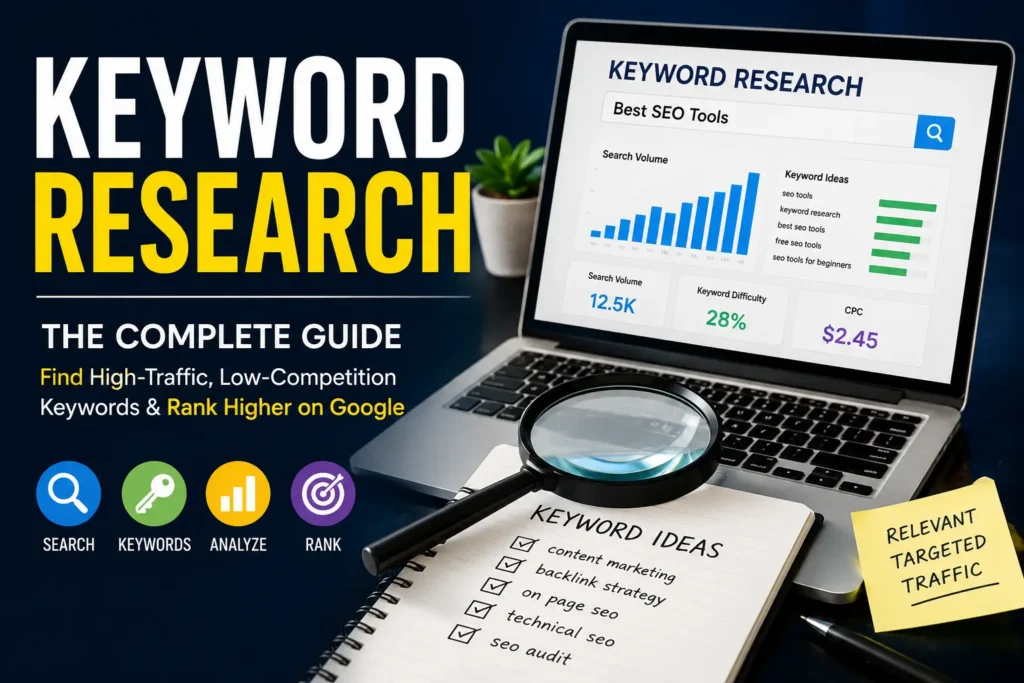
Keyword Research: The Complete Guide to Finding High-Traffic, Low-Competition Keywords
How to Build an Effective Digital Marketing Strategy
A successful digital marketing strategy requires planning and continuous optimization.
Step 1: Define Your Goals
Set SMART goals such as:
- Increase website traffic
- Generate qualified leads
- Improve sales
- Build brand awareness
- Increase email subscribers
Step 2: Understand Your Audience
Research:
- Age
- Gender
- Interests
- Location
- Buying behavior
- Pain points
- Preferred online platforms
Step 3: Analyze Competitors
Study competitors to understand:
- Keywords they rank for
- Content strategy
- Backlink profile
- Social media activity
- Advertising approach
Step 4: Choose Marketing Channels
Focus on the channels most relevant to your audience:
- SEO
- PPC
- Social media
- Content marketing
- Video marketing
Step 5: Create High-Quality Content
Publish valuable content consistently, including:
- Blog posts
- Videos
- Guides
- Infographics
- Case studies
- FAQs
Step 6: Measure and Optimize
Track important metrics such as:
- Organic traffic
- Bounce rate
- Click-through rate (CTR)
- Conversion rate
- Cost per acquisition (CPA)
- Return on investment (ROI)
Use analytics insights to improve campaign performance continuously.
Best Digital Marketing Tools
Popular tools include:
- Google Analytics
- Google Search Console
- Google Ads
- Keyword Planner
- Canva
- Ahrefs
- SEMrush
- Moz
- HubSpot
- Mailchimp
- Buffer
- Hootsuite
- WordPress
- Yoast SEO
- ChatGPT
These tools help with SEO, analytics, content creation, email marketing, automation, and social media management.
AI in Digital Marketing
Artificial Intelligence has transformed digital marketing by enabling businesses to automate repetitive tasks, personalize customer experiences, and analyze large datasets quickly.
Common AI applications include:
- Content generation
- Chatbots
- Customer support
- Predictive analytics
- Personalized recommendations
- Marketing automation
- Keyword research
- Ad optimization
Businesses that effectively combine AI with human creativity can improve productivity while maintaining authentic customer relationships.
Common Digital Marketing Mistakes to Avoid
Many businesses struggle because they make avoidable mistakes.
Some common errors include:
- Ignoring SEO fundamentals
- Publishing inconsistent content
- Not tracking analytics
- Targeting the wrong audience
- Slow website speed
- Poor mobile experience
- Weak calls to action
- Buying low-quality backlinks
- Ignoring email marketing
- Failing to test campaigns
Avoiding these mistakes helps maximize marketing performance and return on investment.
 SEO
SEO
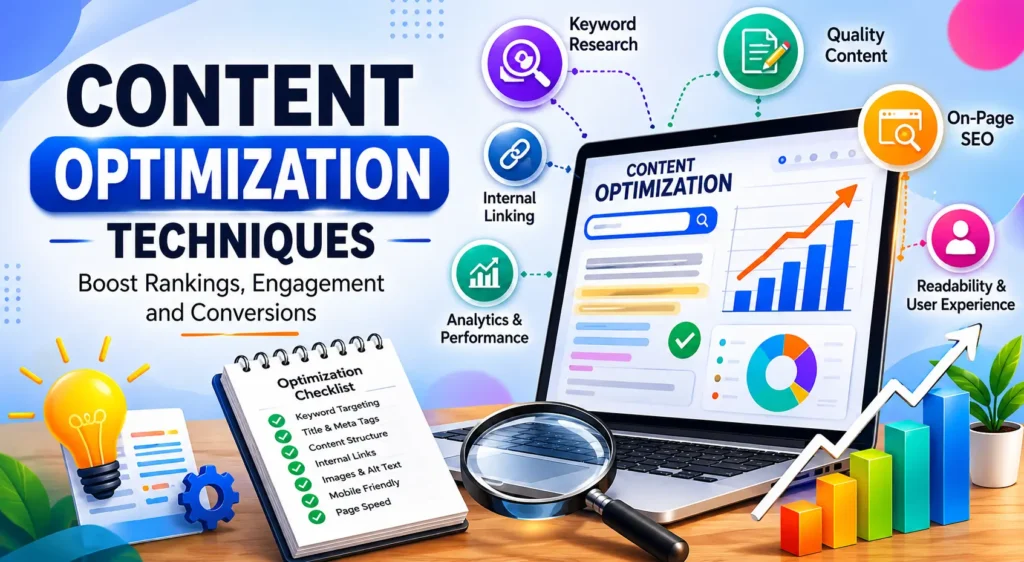
Content Optimization Techniques: The Complete Guide to Maximizing Visibility, Engagement, and Conversions
Future of Digital Marketing
The future of digital marketing will continue to evolve with advancements in AI, automation, voice search, privacy-focused marketing, and immersive technologies.
Businesses should prepare for:
- AI-powered personalization
- Voice search optimization
- Visual search
- Interactive content
- Short-form video growth
- First-party data strategies
- Marketing automation
- Predictive customer analytics
- Enhanced user experience
- Greater emphasis on trust and transparency
Staying updated with these trends will help businesses remain competitive in the ever-changing digital landscape.
Frequently Asked Questions (FAQs)
Digital marketing is the practice of promoting products, services, or brands through online channels such as search engines, websites, social media platforms, email, mobile applications, and paid advertising. Unlike traditional marketing methods, digital marketing allows businesses to connect with their target audience in real time while tracking every campaign’s performance through analytics and data.
Digital marketing is important because consumers now spend a significant amount of their time online researching products, comparing prices, reading reviews, and making purchasing decisions. A strong digital presence helps businesses increase brand awareness, generate qualified leads, improve customer engagement, and boost sales. Whether you’re a startup, local business, freelancer, or multinational company, digital marketing provides cost-effective opportunities to compete in today’s highly competitive online marketplace. With the right strategy, businesses can reach customers worldwide while continuously optimizing campaigns for better results.
Digital marketing includes several specialized channels, each serving a different purpose in attracting and converting customers. The most common types include Search Engine Optimization (SEO), Content Marketing, Social Media Marketing, Email Marketing, Pay-Per-Click (PPC) Advertising, Affiliate Marketing, Influencer Marketing, Mobile Marketing, and Video Marketing.
SEO focuses on improving website visibility in search engine results to generate organic traffic. Content marketing involves creating valuable blog posts, guides, videos, and other resources that educate and engage audiences. Social media marketing builds relationships with customers through platforms like Facebook, Instagram, LinkedIn, and X. PPC advertising generates immediate traffic through paid search ads, while email marketing nurtures leads and strengthens customer loyalty. Affiliate and influencer marketing leverage third parties to promote products, expanding brand reach and credibility. Combining these channels creates a comprehensive digital marketing strategy that supports long-term business growth.
Beginners can start by understanding the fundamentals of digital marketing before specializing in a specific area. Learning the basics of SEO, content marketing, social media management, email marketing, and online advertising provides a solid foundation. Reading industry blogs, watching educational videos, taking online courses, and practicing on a personal website or blog are excellent ways to gain hands-on experience.
It’s also important to learn how to use essential tools such as Google Analytics, Google Search Console, keyword research platforms, and content management systems. Experimenting with small projects, analyzing campaign performance, and staying updated with industry trends will help beginners build practical skills. Since digital marketing evolves rapidly, continuous learning and regular practice are essential for long-term success. Certifications and real-world projects can also strengthen your knowledge and improve career opportunities.
There is no single strategy that works best for every business because success depends on business goals, industry, target audience, and budget. However, the most successful companies use an integrated digital marketing strategy that combines multiple channels rather than relying on just one.
For example, SEO provides sustainable organic traffic over time, while PPC advertising generates immediate visibility. Content marketing builds trust and authority, social media strengthens customer engagement, and email marketing nurtures leads into loyal customers. Businesses should also use analytics to measure performance, identify successful campaigns, and continuously optimize their marketing efforts. A balanced strategy that combines organic and paid marketing usually delivers the highest return on investment while supporting both short-term and long-term business growth.
Digital marketing continues to evolve as technology and consumer behavior change. In 2026, businesses should focus on Artificial Intelligence (AI), marketing automation, personalized customer experiences, voice search optimization, short-form video content, interactive content, and data-driven decision-making. AI-powered tools help automate repetitive tasks, improve customer support through chatbots, generate content ideas, and optimize advertising campaigns.
Video marketing remains one of the most effective ways to engage audiences, especially through short-form content on social media platforms. Businesses should also prioritize mobile-first website design, fast page loading speeds, local SEO, and privacy-focused marketing strategies that respect user data. Additionally, creating valuable, trustworthy, and user-focused content remains one of the strongest factors for improving search engine rankings and building long-term customer relationships. Companies that embrace innovation while consistently delivering value to their audience will be better positioned for sustainable digital growth.
Conclusion
Digital marketing is no longer optional—it is a fundamental part of building and growing a successful business in today’s digital economy. By combining SEO, content marketing, social media, PPC, email marketing, video marketing, and emerging AI technologies, businesses can reach the right audience, strengthen customer relationships, and achieve sustainable growth.
The most effective digital marketing strategies focus on providing value, understanding customer needs, and continuously improving through data-driven decisions. Whether you’re a beginner or an experienced marketer, consistent learning and adaptation are the keys to long-term success.
Leave a Reply