Introduction
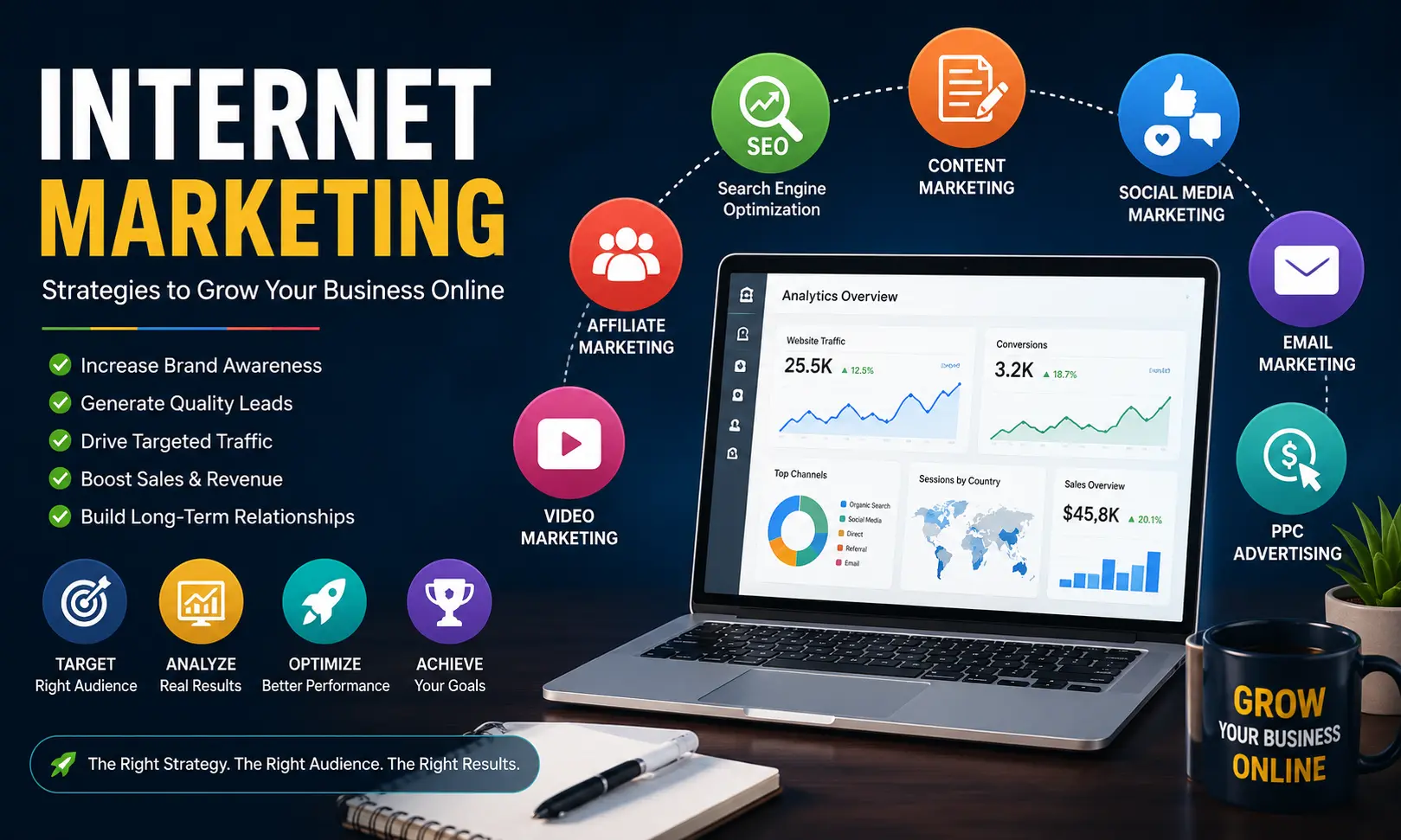
The internet has transformed the way businesses communicate with customers. Today, almost every company—from startups and freelancers to multinational corporations—uses internet marketing to promote products and services. Whether someone is searching for information on Google, scrolling through social media, watching YouTube videos, or checking emails, businesses have countless opportunities to connect with potential customers.
Internet marketing is no longer optional. It has become an essential part of business growth because consumers spend a significant portion of their daily lives online. Companies that invest in effective digital strategies can reach larger audiences, generate qualified leads, improve brand awareness, and increase sales more efficiently than traditional marketing methods.
In 2026, advancements in artificial intelligence, automation, voice search, personalized content, and data analytics are reshaping online marketing. Businesses that adapt to these trends will gain a competitive advantage and build stronger relationships with their audiences.
This comprehensive guide explains everything you need to know about internet marketing, its major components, and how to use it effectively to grow your business.
Table of Contents
- Introduction
- What is Internet Marketing?
- Why Internet Marketing is Important in 2026
- Key Benefits of Internet Marketing
- How Internet Marketing Works
- Types of Internet Marketing
- Search Engine Optimization (SEO)
- Content Marketing
- Social Media Marketing
- Email Marketing
- Pay-Per-Click (PPC) Advertising
- Affiliate Marketing
- Influencer Marketing
- Video Marketing
- Mobile Marketing
- Search Engine Optimization (SEO): Complete Guide
- Content Marketing Strategies
- Social Media Marketing Best Practices
- Email Marketing for Business Growth
- Affiliate Marketing: How It Works
- Pay-Per-Click (PPC) Advertising
- Influencer Marketing
- Video Marketing
- Mobile Marketing
- Artificial Intelligence (AI) in Internet Marketing
- Latest Internet Marketing Trends in 2026
- Step-by-Step Internet Marketing Strategy
- Essential Tools for Internet Marketing
- Common Internet Marketing Mistakes to Avoid
- Tips for Building a Successful Online Marketing Campaign
- How to Measure Internet Marketing Success
- The Future of Internet Marketing
- Final Thoughts
- Conclusion
- Frequently Asked Questions (FAQs)
What is Internet Marketing?
Internet marketing, also called online marketing or digital internet marketing, refers to the process of promoting products, services, or brands using internet-based channels.
Unlike traditional marketing, internet marketing allows businesses to communicate directly with customers through websites, search engines, email, social media platforms, online advertisements, mobile applications, and digital content.
Its primary objectives include:
- Increasing website traffic
- Building brand awareness
- Generating quality leads
- Improving customer engagement
- Boosting online sales
- Creating long-term customer relationships
Businesses of every size use internet marketing because it offers measurable results and allows campaigns to be optimized based on real-time performance data.
 SEO
SEO
Krishna Kushwaha| Jul 06, 2026| 19 min read
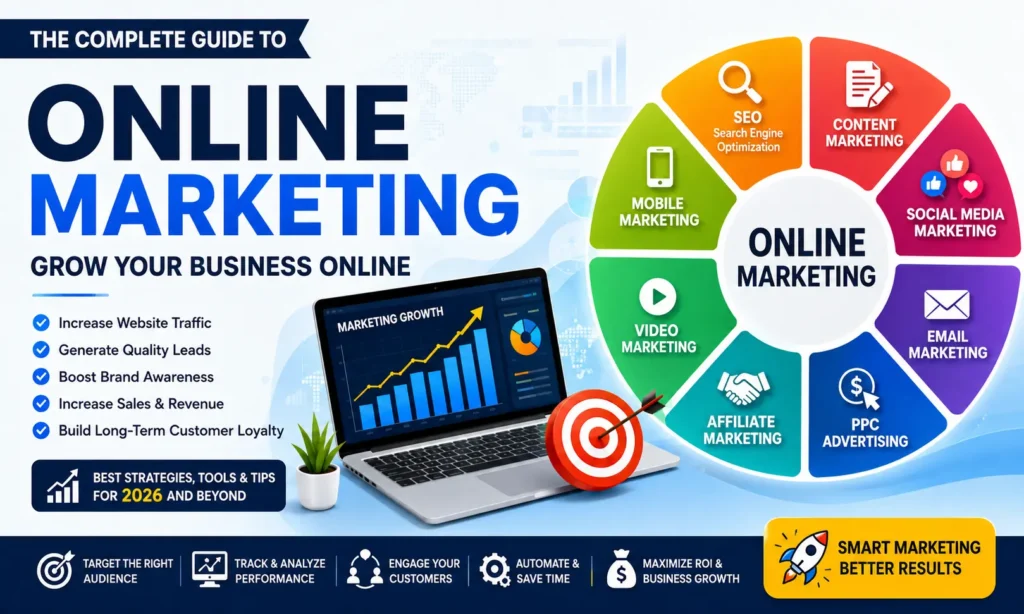
Online Marketing: The Complete Guide to Growing Your Business Online in 2026
Why Internet Marketing is Important in 2026
Consumer behavior continues to evolve rapidly. People now research products online before making purchasing decisions. They compare prices, read reviews, watch videos, and seek recommendations on social media.
Some reasons internet marketing has become essential include:
Global Reach
Businesses can target customers anywhere in the world without opening physical stores.
Cost-Effective Marketing
Compared to television, newspapers, and radio advertising, online marketing often delivers better ROI with smaller budgets.
Better Targeting
Businesses can target audiences based on:
- Age
- Gender
- Interests
- Occupation
- Location
- Shopping behavior
- Device type
Real-Time Performance Tracking
Every click, impression, conversion, and purchase can be measured.
Marketing decisions are now based on data instead of assumptions.
Higher Customer Engagement
Businesses can communicate instantly using:
- Live chat
- Social media
- Comments
- Messaging apps
Improved Brand Trust
Consistent online content helps businesses establish authority and credibility.
Benefits of Internet Marketing
Internet marketing provides advantages that traditional advertising cannot match.
1. Affordable Marketing
Small businesses can compete with larger companies using affordable digital campaigns.
Instead of spending thousands on television advertisements, businesses can invest in SEO, content marketing, or social media campaigns that deliver long-term results.
2. Better Return on Investment
Every marketing activity can be tracked.
Businesses know:
- Cost per click
- Cost per lead
- Cost per acquisition
- Revenue generated
- Customer lifetime value
This enables smarter budgeting.
3. Increased Brand Visibility
Publishing valuable content consistently helps businesses appear in:
- Google Search
- YouTube
- Social Media
- Google Images
- Google Discover
Greater visibility leads to more trust and recognition.
4. 24/7 Marketing
Your website works around the clock.
Customers can:
- Read blog articles
- Purchase products
- Contact support
- Download resources
Even while you’re sleeping.
5. Improved Customer Relationships
Email newsletters, educational content, and personalized offers help businesses maintain long-term customer relationships.
Satisfied customers are more likely to return and recommend your business.
6. Faster Business Growth
Companies using multiple online marketing channels often experience faster growth due to increased exposure and consistent lead generation.
 SEO
SEO
Krishna Kushwaha| Jul 04, 2026| 16 min read
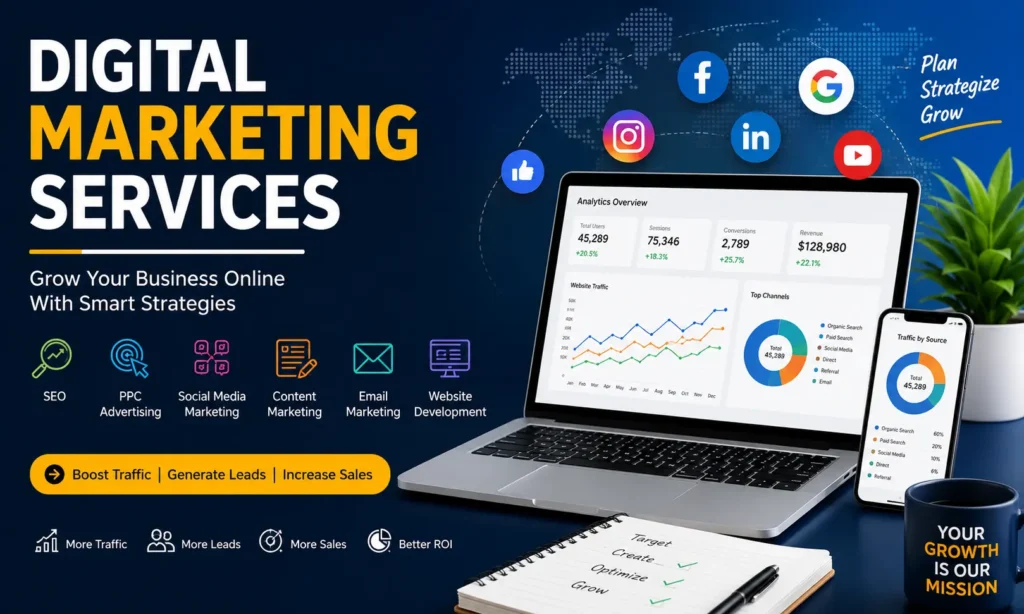
Digital Marketing Services: The Ultimate Guide to Growing Your Business Online in 2026
Types of Internet Marketing
Internet marketing includes several interconnected strategies.
The most popular methods include:
- Search Engine Optimization (SEO)
- Content Marketing
- Social Media Marketing
- Email Marketing
- Affiliate Marketing
- Pay-Per-Click Advertising (PPC)
- Influencer Marketing
- Video Marketing
- Mobile Marketing
- Online Reputation Management
Each strategy serves a unique purpose, and the best results usually come from combining multiple channels into one cohesive marketing plan.
Search Engine Optimization (SEO)
SEO is the process of improving a website so that it ranks higher in search engine results. When people search for information, products, or services on Google, websites with strong SEO are more likely to appear at the top.
Why SEO Matters
SEO brings organic traffic, meaning visitors arrive without paying for ads. High-quality SEO can generate consistent traffic for months or even years after content is published.
Key Components of SEO
Keyword Research
Finding the words and phrases people use to search online is the foundation of SEO. Tools like Google Keyword Planner and other SEO platforms help identify relevant keywords with good search volume and manageable competition.
On-Page SEO
This involves optimizing individual pages by:
- Using target keywords naturally
- Writing compelling titles and meta descriptions
- Structuring content with headings (H1, H2, H3)
- Optimizing images with descriptive alt text
- Improving internal linking
Technical SEO
Technical SEO ensures search engines can efficiently crawl and index your site. Important factors include:
- Fast loading speed
- Mobile responsiveness
- Secure HTTPS connection
- XML sitemap
- Clean URL structure
Off-Page SEO
Building authority through backlinks from reputable websites signals trustworthiness to search engines.
Benefits of SEO
- Long-term traffic
- High credibility
- Better user experience
- Lower acquisition costs
- Sustainable growth
SEO remains one of the highest-return marketing investments for businesses in 2026.
Content Marketing
Content marketing focuses on creating and sharing valuable, relevant, and consistent content to attract and retain a clearly defined audience.
Rather than directly selling, content marketing educates, informs, and solves customer problems.
Types of Content
Businesses can produce:
- Blog posts
- Guides
- Tutorials
- E-books
- Whitepapers
- Infographics
- Videos
- Podcasts
- Webinars
- Case studies
Why Content Marketing Works
High-quality content builds trust. When businesses consistently answer customer questions and provide useful information, they become recognized as industry experts.
Characteristics of Great Content
- Accurate
- Original
- Easy to read
- Well-structured
- SEO-friendly
- Actionable
- Updated regularly
Content Marketing Benefits
- More website traffic
- Better SEO performance
- Increased brand awareness
- Lead generation
- Customer loyalty
Publishing comprehensive articles regularly remains one of the best ways to build long-term online authority.
 SEO
SEO
Krishna Kushwaha| Jul 04, 2026| 14 min read
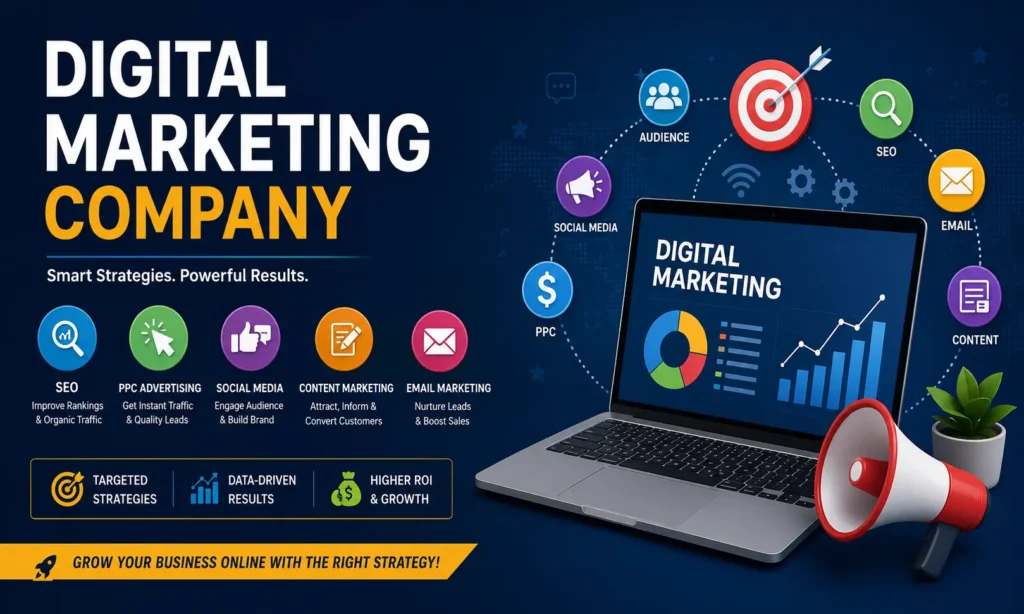
Digital Marketing Company – The Complete Guide to Growing Your Business Online in 2026
Social Media Marketing
Social media marketing involves promoting products, services, and content through social networking platforms.
Popular platforms include:
- X (formerly Twitter)
- YouTube
- TikTok
Goals of Social Media Marketing
Businesses use social media to:
- Increase brand awareness
- Drive website traffic
- Generate leads
- Build communities
- Provide customer support
- Promote products
Effective Social Media Strategies
- Post consistently
- Share educational content
- Engage with followers
- Use high-quality visuals
- Leverage short-form videos
- Collaborate with creators
- Monitor analytics
Common Content Formats
- Images
- Reels
- Stories
- Polls
- Live videos
- Carousels
- Educational posts
- Customer testimonials
Benefits
Social media enables businesses to interact directly with customers, receive instant feedback, and create loyal communities around their brands.
Email Marketing
Email marketing remains one of the highest-converting online marketing channels because it allows businesses to communicate directly with subscribers who have already expressed interest.
Types of Email Campaigns
- Welcome emails
- Weekly newsletters
- Promotional campaigns
- Product announcements
- Event invitations
- Educational series
- Abandoned cart reminders
Best Practices
- Personalize subject lines
- Segment your audience
- Provide valuable content
- Include clear calls to action
- Optimize for mobile devices
- Test different send times
Advantages
- High ROI
- Strong customer retention
- Personalized communication
- Increased repeat purchases
- Easy automation
Marketing automation tools allow businesses to send timely, relevant messages based on user behavior, making email one of the most efficient channels for nurturing leads.
Affiliate Marketing
Affiliate marketing is a performance-based strategy where businesses reward partners (affiliates) for generating sales or leads.
Affiliates promote products through:
- Blogs
- YouTube channels
- Websites
- Email newsletters
- Social media
- Online communities
When a customer purchases through an affiliate’s unique tracking link, the affiliate earns a commission.
Benefits for Businesses
- Pay only for results
- Expand brand reach
- Access niche audiences
- Increase sales without large upfront advertising costs
Benefits for Affiliates
- Flexible work
- Passive income potential
- Low startup costs
- Scalable earnings
To succeed in affiliate marketing, businesses should provide high-quality products, attractive commission structures, and reliable tracking systems.
How These Marketing Channels Work Together
No single strategy is enough on its own. Successful internet marketing combines multiple channels to create a seamless customer journey.
For example:
- A user discovers your blog through SEO.
- They read a helpful article created through content marketing.
- They follow your brand on social media.
- They subscribe to your email newsletter.
- They receive personalized emails.
- They click a promotional offer.
- They complete a purchase.
- They recommend your business to others or join your affiliate program.
This integrated approach increases trust, engagement, and conversions over time.
13. Pay-Per-Click (PPC) Advertising
Pay-Per-Click (PPC) advertising is one of the fastest ways to generate targeted website traffic. Unlike SEO, which can take months to show results, PPC campaigns can begin driving visitors almost immediately after launch.
With PPC, advertisers pay only when someone clicks on their advertisement. This makes it a performance-based marketing strategy that offers measurable results and precise budget control.
Popular PPC Platforms
- Google Ads
- Microsoft Advertising (Bing Ads)
- Facebook Ads
- Instagram Ads
- LinkedIn Ads
- YouTube Ads
- Pinterest Ads
- X (Twitter) Ads
Benefits of PPC Marketing
- Instant website traffic
- Highly targeted audience
- Budget flexibility
- Measurable ROI
- Fast lead generation
- Brand visibility
- Remarketing opportunities
PPC Best Practices
- Research high-intent keywords.
- Write compelling ad copy.
- Use optimized landing pages.
- Add clear calls to action (CTAs).
- Track conversions.
- Continuously A/B test ads.
Businesses often combine PPC with SEO to achieve both short-term and long-term growth.
14. Influencer Marketing
Influencer marketing involves partnering with creators who have established trust with their audiences. Instead of relying solely on traditional advertising, brands leverage influencers to introduce products or services in a more authentic way.
Types of Influencers
- Nano Influencers
- Micro Influencers
- Mid-Tier Influencers
- Macro Influencers
- Celebrity Influencers
Why Influencer Marketing Works
Consumers tend to trust recommendations from people they follow more than traditional advertisements. Authentic reviews, demonstrations, and personal experiences often drive stronger engagement and conversions.
Best Practices
- Choose influencers relevant to your niche.
- Focus on engagement rather than follower count.
- Set clear campaign goals.
- Allow creative freedom while maintaining brand guidelines.
- Track campaign performance.
15. Video Marketing
Video has become one of the most effective forms of online content. Short-form videos, tutorials, product demos, customer testimonials, webinars, and live streams help businesses educate and engage audiences.
Types of Marketing Videos
- Product demonstrations
- How-to tutorials
- Brand stories
- Customer testimonials
- Explainer videos
- Behind-the-scenes content
- Live streams
- Educational series
Benefits of Video Marketing
- Higher engagement
- Better conversion rates
- Increased website time-on-page
- Improved social sharing
- Enhanced brand trust
Video Optimization Tips
- Create compelling thumbnails.
- Add captions for accessibility.
- Use keyword-rich titles and descriptions.
- Include CTAs within the video.
- Optimize video length based on the platform.
16. Mobile Marketing
With the majority of internet users accessing content through smartphones, mobile marketing is essential.
Mobile Marketing Strategies
- Mobile-friendly websites
- Responsive design
- SMS marketing
- Push notifications
- Mobile apps
- Location-based marketing
- QR code campaigns
Mobile SEO Tips
- Improve page speed.
- Simplify navigation.
- Use readable font sizes.
- Optimize images.
- Ensure clickable buttons are easy to tap.
A seamless mobile experience improves user satisfaction and search engine rankings.
17. Artificial Intelligence (AI) in Internet Marketing
Artificial Intelligence has transformed digital marketing by automating repetitive tasks, analyzing large datasets, and personalizing customer experiences.
AI Applications
Content Creation
AI tools can assist with:
- Blog outlines
- Social media captions
- Email drafts
- Product descriptions
Customer Support
AI-powered chatbots provide instant responses to common questions, improving customer service around the clock.
Personalization
AI analyzes user behavior to recommend products, tailor content, and deliver personalized email campaigns.
Predictive Analytics
Businesses use AI to forecast trends, identify customer preferences, and optimize marketing strategies.
Benefits of AI
- Improved efficiency
- Faster decision-making
- Better customer experiences
- Higher conversion rates
- Reduced operational costs
AI should support—not replace—human creativity, strategy, and oversight.
18. Latest Internet Marketing Trends for 2026
The digital marketing landscape continues to evolve. Staying updated with emerging trends helps businesses remain competitive.
Voice Search Optimization
As voice assistants become more common, optimizing content for conversational queries is increasingly important.
AI-Driven Personalization
Consumers expect personalized recommendations and experiences tailored to their interests.
First-Party Data
With increasing privacy regulations and reduced reliance on third-party cookies, collecting and responsibly using first-party data has become more valuable.
Short-Form Video
Quick, engaging videos continue to perform well across many social platforms.
Interactive Content
Examples include:
- Quizzes
- Polls
- Interactive calculators
- Live Q&A sessions
- Surveys
Interactive experiences encourage participation and increase engagement.
Omnichannel Marketing
Customers often interact with brands across multiple channels before making a purchase. Consistent messaging across websites, email, social media, and advertising creates a stronger customer experience.
19. Step-by-Step Internet Marketing Strategy
A successful internet marketing strategy follows a structured process.
Step 1: Define Goals
Examples:
- Increase traffic
- Generate leads
- Improve sales
- Build brand awareness
Step 2: Understand Your Audience
Research:
- Demographics
- Interests
- Pain points
- Online behavior
Step 3: Build a Professional Website
Ensure your website is:
- Fast
- Mobile-friendly
- Secure (HTTPS)
- Easy to navigate
- Optimized for conversions
Step 4: Perform Keyword Research
Identify keywords that match user intent and align with your products or services.
Step 5: Create High-Quality Content
Publish valuable:
- Blog posts
- Videos
- Guides
- FAQs
- Case studies
Step 6: Optimize for Search Engines
Focus on:
- On-page SEO
- Technical SEO
- Internal linking
- High-quality backlinks
Step 7: Promote Content
Distribute your content through:
- Social media
- Email marketing
- PPC campaigns
- Online communities
Step 8: Measure Performance
Monitor metrics such as:
- Website traffic
- Conversion rate
- Bounce rate
- Average session duration
- Return on investment (ROI)
Step 9: Optimize Continuously
Use analytics and user feedback to refine your strategy over time.
20. Common Internet Marketing Mistakes
Avoid these frequent mistakes:
- Ignoring SEO fundamentals
- Publishing low-quality content
- Not optimizing for mobile devices
- Failing to track analytics
- Neglecting email marketing
- Inconsistent branding
- Overlooking website speed
- Using irrelevant keywords
- Forgetting clear CTAs
- Not updating old content
Addressing these issues can significantly improve marketing performance.
21. The Future of Internet Marketing
The future of internet marketing will likely be shaped by advancements in AI, automation, data privacy, and immersive technologies.
Businesses that prioritize:
- Customer experience
- High-quality content
- Ethical data practices
- Continuous learning
- Adaptability
will be better positioned for long-term success.
Rather than relying on a single marketing tactic, successful organizations will integrate multiple channels into a cohesive strategy centered on delivering value to their audiences.
Final Thoughts
Internet marketing is more than simply promoting products online—it is about building trust, understanding customer needs, and creating meaningful digital experiences.
Whether you are a freelancer, entrepreneur, blogger, or established business owner, investing in internet marketing skills can help you expand your reach, strengthen your brand, and achieve sustainable growth.
The most successful marketers continually test, measure, and improve their campaigns while staying informed about new technologies and changing consumer behaviors.
Conclusion
Internet marketing has become an indispensable component of modern business strategy. From SEO and content marketing to PPC, social media, email campaigns, influencer collaborations, and AI-powered personalization, each channel contributes to attracting, engaging, and retaining customers.
A well-rounded strategy combines these methods to create a seamless customer journey. By focusing on quality content, user experience, data-driven decision-making, and ethical marketing practices, businesses can build lasting relationships and remain competitive in the evolving digital landscape.
Success in internet marketing is not achieved overnight. It requires consistency, experimentation, and a commitment to continuous improvement—but the long-term rewards can be substantial.
Frequently Asked Questions (FAQs) About Internet Marketing
Internet marketing, also known as online marketing or digital marketing, is the process of promoting products, services, or brands through internet-based channels such as websites, search engines, social media platforms, email, mobile apps, and online advertising. Unlike traditional marketing methods like newspapers, radio, or television, internet marketing allows businesses to reach a global audience while tracking the performance of every campaign in real time.
Internet marketing is important because today’s consumers spend a significant amount of time online researching products, reading reviews, watching videos, and comparing prices before making purchasing decisions. A strong online presence helps businesses increase brand awareness, generate qualified leads, improve customer engagement, and boost sales. Additionally, businesses can target specific audiences based on demographics, interests, behaviors, and locations, making marketing efforts more efficient and cost-effective. Whether you run a small business, startup, or large enterprise, internet marketing is essential for sustainable growth in today’s digital economy.
Internet marketing includes several strategies that work together to help businesses grow online. The most common types are Search Engine Optimization (SEO), Content Marketing, Social Media Marketing, Email Marketing, Pay-Per-Click (PPC) Advertising, Affiliate Marketing, Influencer Marketing, Video Marketing, and Mobile Marketing.
SEO focuses on improving a website’s visibility in search engine results to attract organic traffic. Content marketing involves creating valuable blog posts, videos, guides, and other resources that educate and engage audiences. Social media marketing helps businesses connect with customers on platforms like Facebook, Instagram, LinkedIn, and YouTube. Email marketing is used to nurture leads, promote offers, and build long-term customer relationships. PPC advertising provides instant visibility by displaying paid ads on search engines and social media platforms. Affiliate marketing allows businesses to partner with individuals or publishers who promote products in exchange for commissions. Combining these strategies creates a comprehensive internet marketing plan that supports long-term business growth.
The time required to see results depends on the marketing strategy being used. Paid advertising campaigns such as Google Ads or social media ads can generate website traffic and leads within hours or days. However, long-term strategies like SEO and content marketing generally require several months before significant improvements in search rankings and organic traffic become visible.
For example, a well-optimized website with high-quality content may begin to see measurable SEO improvements within three to six months, although competitive industries may require more time. Email marketing campaigns can produce quick engagement if a business already has an active subscriber list. Social media growth depends on posting consistency, audience engagement, and content quality.
Internet marketing should be viewed as an ongoing investment rather than a one-time activity. Businesses that consistently publish valuable content, optimize their websites, analyze performance metrics, and adapt their strategies are more likely to achieve sustainable long-term success.
For beginners, the best approach is to start with a strong foundation rather than trying every marketing channel at once. The first step is creating a professional, mobile-friendly website that clearly explains your products or services. Next, focus on Search Engine Optimization (SEO) by researching relevant keywords and publishing informative, high-quality blog articles that answer your audience’s questions.
Content marketing works especially well because it builds trust and supports SEO efforts. Beginners should also establish a presence on one or two social media platforms where their target audience is most active. Sharing useful content consistently can help increase visibility and engagement over time. Building an email list from the beginning is another smart strategy, allowing businesses to communicate directly with potential customers through newsletters and promotional campaigns.
Once these core strategies are performing well, businesses can expand into PPC advertising, influencer collaborations, affiliate marketing, and marketing automation. Starting with a clear plan and focusing on delivering value to users will produce better long-term results than attempting to use every marketing channel simultaneously.
Measuring performance is one of the greatest advantages of internet marketing. Businesses can track nearly every aspect of a campaign using analytics tools and key performance indicators (KPIs). Common metrics include website traffic, organic search rankings, click-through rate (CTR), conversion rate, bounce rate, average session duration, cost per acquisition (CPA), return on investment (ROI), and customer lifetime value (CLV).
For SEO campaigns, businesses monitor keyword rankings, organic traffic growth, and backlinks. Social media success can be evaluated through engagement metrics such as likes, comments, shares, follower growth, and reach. Email marketing performance is measured using open rates, click rates, unsubscribe rates, and conversions. PPC campaigns are assessed by tracking impressions, clicks, quality scores, cost per click (CPC), and conversion rates.
Regular analysis helps businesses identify what is working and what needs improvement. By reviewing campaign data, testing different strategies, optimizing content, and refining audience targeting, companies can continually improve marketing performance and maximize their return on investment. Consistent monitoring and data-driven decision-making are essential for long-term success in internet marketing.
Leave a Reply