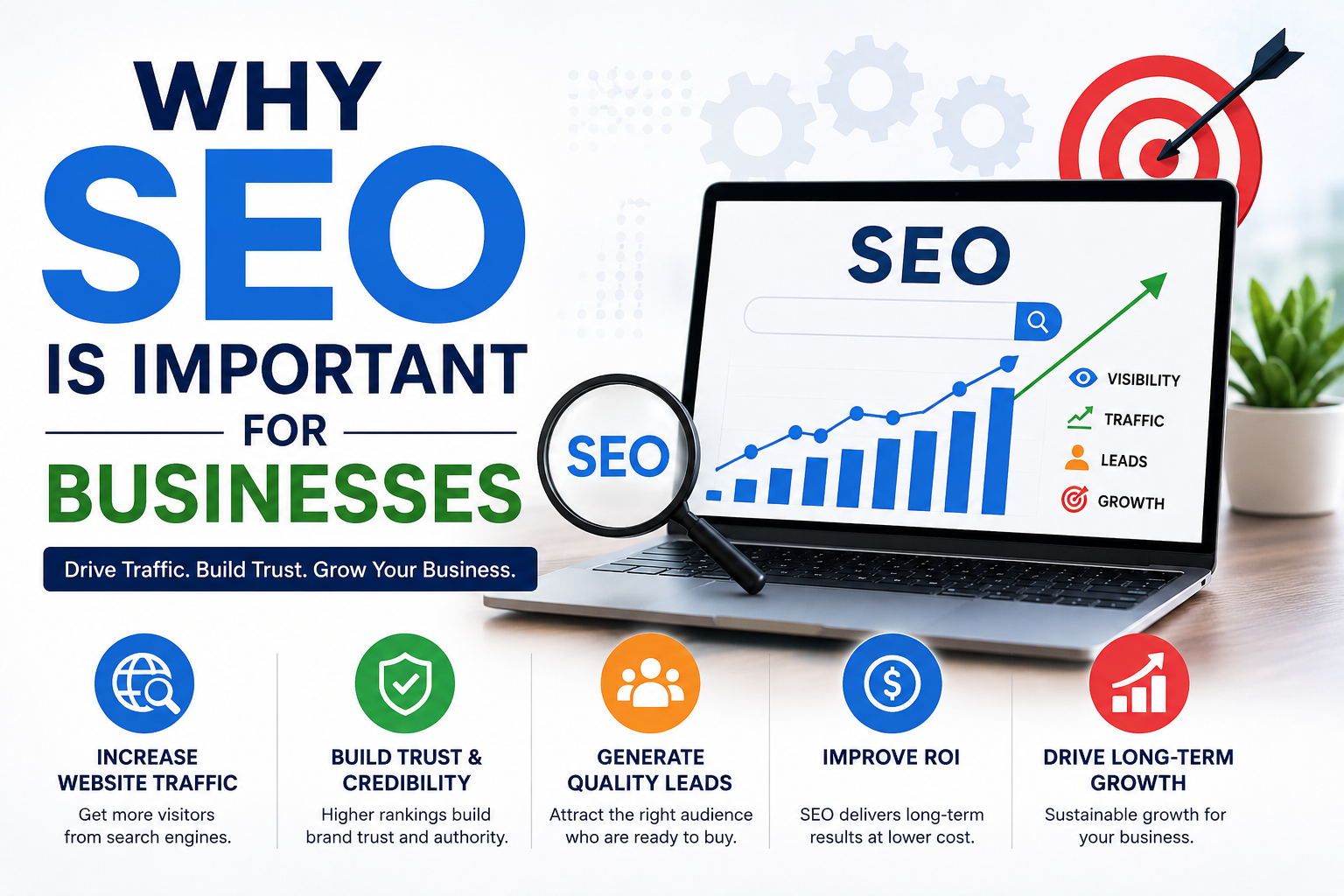
To expand the article to 4,000–5,000+ words and make it more comprehensive, add the following content under each heading.
What Is SEO?
Search Engine Optimization is much more than simply adding keywords to a webpage. It is a strategic process that helps search engines understand your website’s content, relevance, and value to users. SEO combines technical improvements, content creation, website optimization, and authority building to improve search engine rankings.
When a user searches on Google, the search engine analyzes billions of pages and chooses the most relevant results. SEO helps your website become one of those selected results. Effective SEO requires continuous monitoring, content updates, and adaptation to search engine algorithm changes.
Businesses that consistently invest in SEO often experience stronger online visibility, increased customer engagement, and long-term digital growth. SEO is an ongoing process rather than a one-time activity.
Why SEO Matters More Than Ever
The internet has become the primary source of information for consumers worldwide. Before purchasing products or services, people frequently research online, compare options, and read reviews. Search engines play a major role in this decision-making process.
As competition increases across industries, businesses need a reliable way to stand out. SEO provides that opportunity by placing businesses directly in front of people searching for relevant information.
The growth of smartphones, voice search, artificial intelligence, and online shopping has made SEO even more important. Businesses that appear prominently in search results are more likely to gain customer attention and trust than those hidden on later pages.
SEO is no longer just a marketing option; it has become a critical business strategy for maintaining competitiveness in the digital marketplace.
SEO Increases Website Traffic
One of the primary goals of SEO is attracting more visitors to a website. However, SEO focuses on attracting relevant traffic rather than simply increasing visitor numbers.
When your website ranks for multiple keywords related to your products or services, it gains exposure to a wider audience. These visitors arrive because they are actively searching for information, making them more likely to engage with your content.
Consistent SEO efforts can significantly increase traffic over time. Every optimized page creates another opportunity to appear in search results. As more pages rank for various keywords, overall website visibility continues growing.
Increased traffic not only leads to more potential customers but also improves brand awareness and market reach.
SEO Builds Brand Awareness
Brand awareness is essential for business success because customers are more likely to purchase from companies they recognize and trust. SEO helps establish brand awareness by increasing your visibility in search engine results.
When users repeatedly encounter your brand while searching for industry-related topics, they begin associating your business with expertise and reliability. Even if they do not immediately click your website, repeated exposure strengthens recognition.
Over time, a strong SEO presence helps position your business as a leading authority within your industry. Customers often remember brands they frequently see in search results and may return later when they are ready to make a purchase.
This consistent visibility creates valuable long-term marketing benefits that extend beyond direct website traffic.
SEO Generates High-Quality Leads
Unlike traditional advertising methods that target broad audiences, SEO focuses on attracting users already interested in specific topics, products, or services.
Search intent plays a significant role in lead quality. When someone searches for a specific solution, they are often further along in the buying process. This means they are more likely to take action, whether that involves making a purchase, requesting information, or contacting a business.
SEO helps businesses attract visitors who are actively seeking answers, making these leads more valuable than general website traffic. Higher-quality leads often result in increased conversion rates and improved marketing efficiency.
Businesses can also create content targeting different stages of the buyer journey, helping nurture prospects until they are ready to become customers.
SEO Improves Business Credibility
Consumers trust search engines to provide the most relevant and trustworthy information available. Websites that rank highly often benefit from this trust.
Appearing on the first page of search results signals to users that your business is credible and authoritative. Many people naturally assume that top-ranking websites have earned their positions because they provide valuable content and excellent user experiences.
SEO encourages businesses to improve content quality, website performance, and overall user satisfaction. These improvements strengthen credibility and create positive impressions among visitors.
As trust grows, customers become more comfortable engaging with your brand, sharing information, and making purchasing decisions.
SEO Provides Long-Term Results
One of the most attractive aspects of SEO is its ability to generate long-lasting results. Unlike advertising campaigns that stop producing traffic when budgets are exhausted, SEO assets can continue performing for years.
A well-optimized article, landing page, or service page may consistently attract visitors long after publication. As your website gains authority, new content may rank more easily, creating a compounding effect.
Long-term SEO success is built through continuous optimization, content updates, and authority development. Although SEO requires patience, the rewards often exceed those of many short-term marketing strategies.
Businesses that maintain strong SEO foundations can enjoy sustainable growth and reduced dependence on paid advertising.
SEO Delivers Better Return on Investment (ROI)
Marketing budgets are limited, making return on investment a crucial consideration for businesses. SEO frequently delivers strong ROI because it targets users actively searching for relevant solutions.
While SEO requires investment in content creation, technical improvements, and optimization efforts, the resulting traffic does not incur ongoing costs per click. This creates opportunities for significant long-term savings.
As rankings improve, businesses often experience increased traffic, lead generation, and sales without proportionally increasing marketing expenses. Over time, customer acquisition costs may decrease while revenue continues growing.
This combination of efficiency and scalability makes SEO one of the most cost-effective digital marketing channels available.
SEO Helps Businesses Understand Customers
SEO research provides valuable insights into customer behavior and preferences. By analyzing keyword data, businesses can identify what their audience is searching for, the questions they ask, and the challenges they face.
This information helps organizations create more relevant products, services, and marketing campaigns. Understanding customer intent also improves content development by ensuring that website pages address actual user needs.
Analytics tools reveal how visitors interact with content, which pages perform best, and where opportunities for improvement exist. These insights support data-driven decision-making across multiple business functions.
Businesses that leverage SEO data effectively gain a deeper understanding of their market and customer expectations.
SEO Enhances User Experience
Search engines increasingly prioritize user experience when determining rankings. A website that provides a positive experience is more likely to satisfy visitors and achieve strong search performance.
User experience includes factors such as page speed, navigation, readability, design, accessibility, and mobile compatibility. SEO encourages businesses to improve each of these areas.
A user-friendly website reduces frustration and helps visitors quickly find the information they need. Positive experiences often lead to longer visits, higher engagement, and increased conversions.
Improving user experience benefits both customers and search rankings, creating a mutually beneficial relationship between SEO and website performance.
SEO Supports Mobile Users
Mobile internet usage continues to grow as consumers increasingly rely on smartphones for browsing, shopping, and research. Search engines recognize this trend and prioritize mobile-friendly websites.
SEO ensures websites function effectively on smaller screens and varying device types. Mobile optimization includes responsive design, fast loading times, readable text, and intuitive navigation.
A poor mobile experience can lead to higher bounce rates and lost business opportunities. In contrast, mobile-friendly websites provide seamless interactions that encourage users to stay engaged.
Businesses that optimize for mobile users position themselves to capture a larger share of online traffic and customer attention.
SEO Helps Local Businesses Grow
Local SEO is especially valuable for businesses that serve specific geographic regions. Consumers frequently search for nearby services, products, and businesses using location-based queries.
Optimizing local listings, business profiles, reviews, and location-specific content increases visibility within local search results. This helps businesses attract nearby customers who are ready to take action.
Local SEO also improves appearance in map results, which often receive significant user attention. Strong local visibility can increase foot traffic, phone calls, bookings, and in-person sales.
For small and medium-sized businesses, local SEO can be one of the most effective ways to compete with larger organizations.
SEO Gives Businesses a Competitive Advantage
Every industry has competitors competing for customer attention. Businesses that invest in SEO gain an opportunity to outperform rivals in search results.
Higher rankings often translate into greater visibility, traffic, and customer acquisition. Even small improvements in rankings can produce meaningful business benefits.
Competitive SEO analysis helps businesses identify strengths, weaknesses, and opportunities within their market. By understanding competitor strategies, organizations can develop more effective optimization plans.
Maintaining a strong SEO presence ensures that potential customers find your business before they discover competing alternatives.
SEO Supports Content Marketing
Content marketing and SEO work together to create a powerful growth strategy. High-quality content provides value to users, while SEO helps that content reach the right audience.
Educational articles, guides, videos, and resources can attract visitors throughout the customer journey. By answering common questions and addressing user needs, businesses build trust and authority.
SEO research helps identify relevant topics and keywords, ensuring content aligns with audience interests. Well-optimized content can continue generating traffic and engagement long after publication.
Combining SEO with content marketing creates a sustainable system for attracting, educating, and converting customers.
SEO Increases Conversion Rates
Traffic alone does not guarantee business success. The ultimate goal is converting visitors into customers, subscribers, or leads.
SEO attracts users who are already interested in specific products or services, making them more likely to take action. Optimized landing pages, clear calls-to-action, and relevant content further improve conversion potential.
Businesses can analyze user behavior to identify barriers preventing conversions and make improvements accordingly. Small enhancements in conversion rates can significantly increase revenue over time.
Because SEO targets users with high purchase intent, it often contributes to stronger conversion performance compared to many other traffic sources.
SEO Builds Authority and Expertise
Authority is a critical factor in both search rankings and customer trust. Businesses that consistently publish valuable content and demonstrate expertise earn recognition within their industries.
Building authority requires ongoing effort through content creation, thought leadership, public relations, and backlink acquisition. As authority grows, search engines become more likely to rank content prominently.
Customers prefer businesses that appear knowledgeable and trustworthy. Establishing expertise strengthens relationships with audiences and increases confidence in purchasing decisions.
Authority gained through SEO can become a powerful competitive asset that supports long-term business growth.
These expanded sections can add approximately 1,500–2,000 additional words to your article, increasing its depth, SEO value, topical authority, and ranking potential.
Leave a Reply